| Comments: |
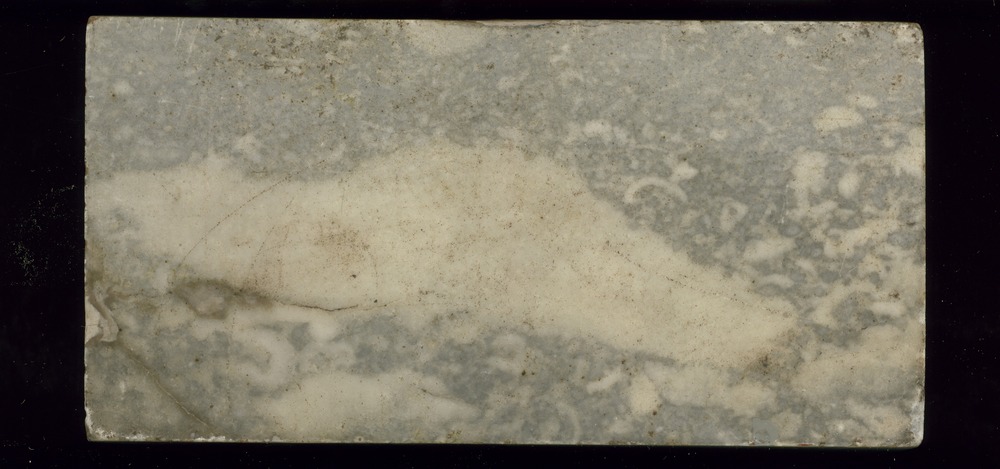
The word 'fiorito' means floral or flowered, and 'Casale' may denote a village or hamlet, or refer to Casale di Sotto, Casale di Sopra, or one of the various settlements called Casale in the hills outside Verona. The painted number on the back of the specimen indicates a Verona/Vicenza provenance (see Verona.pdf for more information). The sample bears some resemblance to the grey form of lumachella di San Vitale, a Lower Jurassic limestone containing the elongate sparry calcite-filled shells of the reef-forming bivalve Lithiotis. It is named after the village of San Vitale di Roverè, a source cited by both Pollini (1817, 1825) and Jervis (1889), but outcrops at a number of locations in the Anguilla, Squaranto and Pantena valleys of Verona as well as other places to the north and east. Compare this stone with nos. 548 and 921.
|
|---|