| OUMNH Number: |
265
|
|---|
| Name and quarry location: |
Astracane di Verona, lumachella di Verona, lumachella Pernise, from Val Pernise; near Grezzana, Verona, Veneto, Italy
|
|---|
| Geological description: |
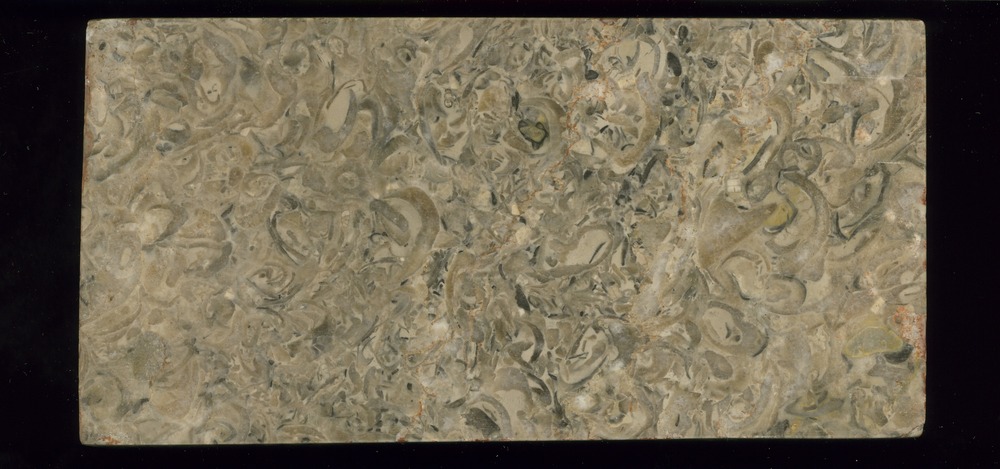
Limestone. A molluscan biosparite crowded with whole and fragmentary brachiopods (probably terebratulids) and bivalves, replaced by sparry calcite. A few gastropods are also present. A stylolite can be seen.
|
|---|
| Comments: |
The painted number on the back of the specimen indicates a Verona/Vicenza provenance for this limestone (see Verona.pdf for more information). It is better known as astracane di Verona, or lumachella di Verona, one of several in Corsi's collection. Jervis (1889) pp.143-4 describes from the Val Pernise in Grezzana a beautiful 'marmo conchigliare' with a grey ground that was used for internal decoration and known by the name 'lumachella Pernise'. Another old sample of this stone, labelled as coming from 'Monte Pernici', is in the Oxford collection.
|
|---|
| References: |
Antonelli (2003); Corsi (1825) 78; Gnoli (1988) 203; Jervis (1889) 143; Price (2007) 161. Other examples OUMNH DR1304 'Monte Pernici'.
|
|---|
| Further information: |
Verona.pdf
|
|---|