| OUMNH Number: |
329
|
|---|
| Name and quarry location: |
Alabastro a pecorella, from Aïn Tekbalet district, Oran, Algeria.
|
|---|
| Geological description: |
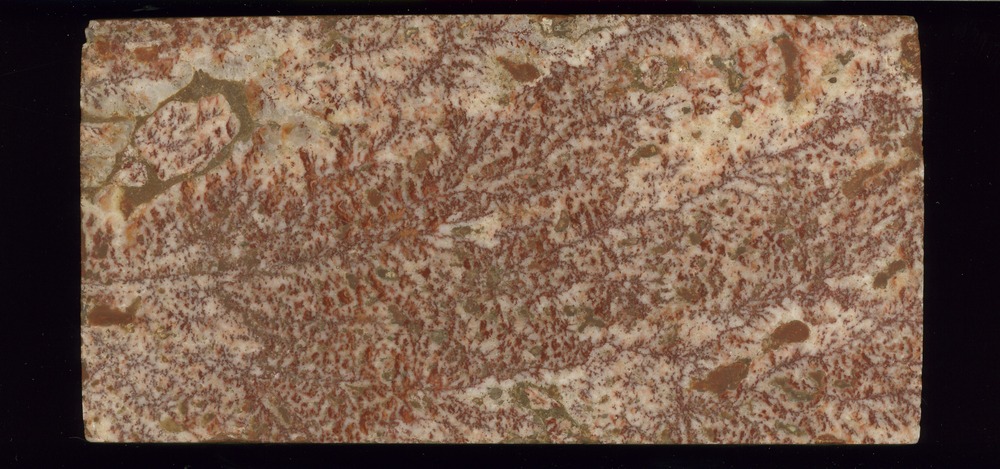
Compact banded travertine now at least partially recrystallised. The dendritic development of iron oxides, predominantly red hematite, is most probably the result of cyanobacterial action in the hot spring water.
|
|---|
| Comments: |
Alabastro a pecorella means little sheep alabaster, but it is the richly coloured bushy growths of iron and manganese oxides that are more distinctive, sometimes giving an almost three dimensional effect. Alabastro a pecorella was exported to Rome from about the 2nd century AD onwards and is often found used and recycled in architecture and sculpture. It is not longer quarried today. The fashion for Algerian 'onyx marble' in the late 19th and 20th centuries was for the green or white translucent stone also found in substantial deposits around Oran.
|
|---|
| References: |
Borghini (1997) 149-150; Chafetz (1998); Corsi (1845) 134-135; Lazzarini (2002c) 244-245; Merrill (1903) 281-284; Mielsch (1985) 39, taf.3; Price (2007) 54-55; Watson (1916) 355-359
|
|---|
| Further information: |
Alabaster-travertine.pdf
|
|---|