| OUMNH Number: |
346
|
|---|
| Name and quarry location: |
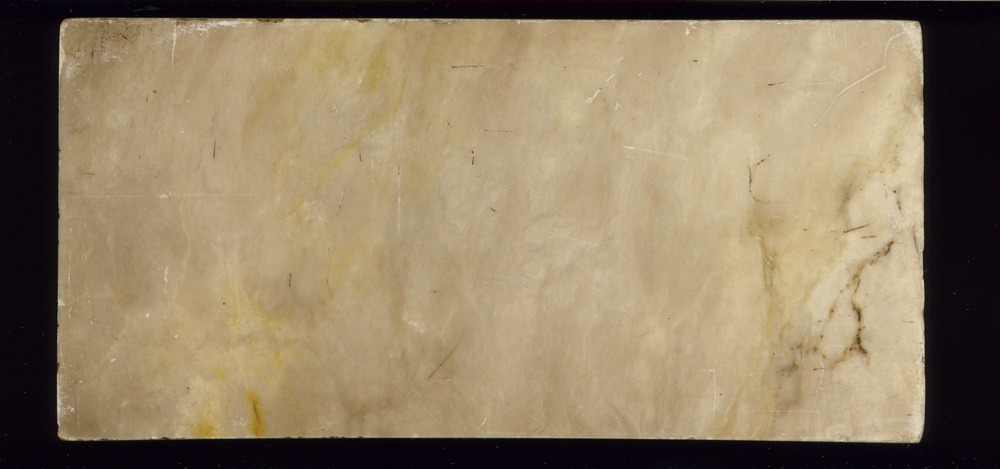
Alabastro di Pisa, probably Alabastro di Volterra, from Pisa, Tuscany, Italy, and very probably from the area around Volterra or Castellina Marittima.
|
|---|
| Geological description: |
Fine-grained compact gypsum, the variety which geologists now call alabaster. A vein of fibrous gypsum crosses the side of the specimen.
|
|---|
| Comments: |
In Corsi's classification, this stone should have been among the gessi (gypsums). The Miocene gypsum alabasters of the areas of Volterra and Castellina Marittima, generally referred to as alabastro di Volterra, are particularly famous, and were worked by the Etruscans as early as the 8th century BC. Working of the alabaster deposits for statuary and other decorative purposes recommenced in the 17th or early 18th century and the stone continues to be worked to this day. See also no. 544.
|
|---|
| References: |
Jervis (1889) 318-326; Price (2007) 46; Stolzuoli (c.1997)
|
|---|
| Further information: |
|
|---|