| OUMNH Number: |
366
|
|---|
| Name and quarry location: |
Lumachella di San Vitale, from Valpantena, Verona, Veneto, Italy
|
|---|
| Geological description: |
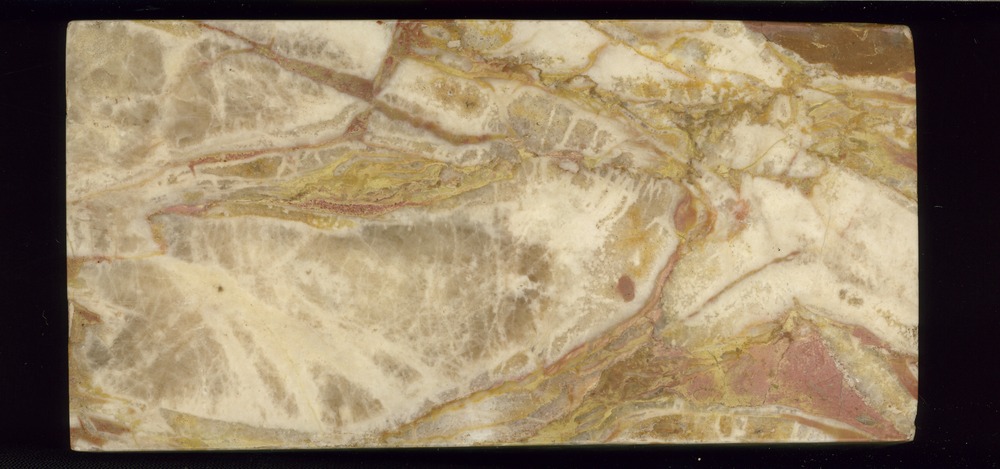
Fossiliferous limestone. Large shells of 'Lithiotis' bivalve and other skeletal elements are replaced by calcite spar. The matrix is biosparite. Note the stylolites.
|
|---|
| Comments: |
This is an example of lumachella di San Vitale, a Lower Jurassic limestone containing the elongate sparry calcite-filled shells of the reef-forming bivalve Lithiotis. It is named after the village of San Vitale di Roverè, a source cited by both Pollini (1817, 1825) and Jervis (1889), but was also obtained from other locations in the Anguilla, Squaranto and Pantena valleys of Verona, as well as other places to the north and east. The painted number on the back of the specimen also confirms a Verona/Vicenza provenance (see Verona.pdf for more information). It is not an alabaster.
|
|---|
| References: |
Antonelli (2003); Fraser (2004); Jervis (1889) 144; Pieri (c.1958) tav.XIV; Price (2007) 168
|
|---|
| Further information: |
Verona.pdf
|
|---|