| OUMNH Number: |
88
|
|---|
| Name and quarry location: |
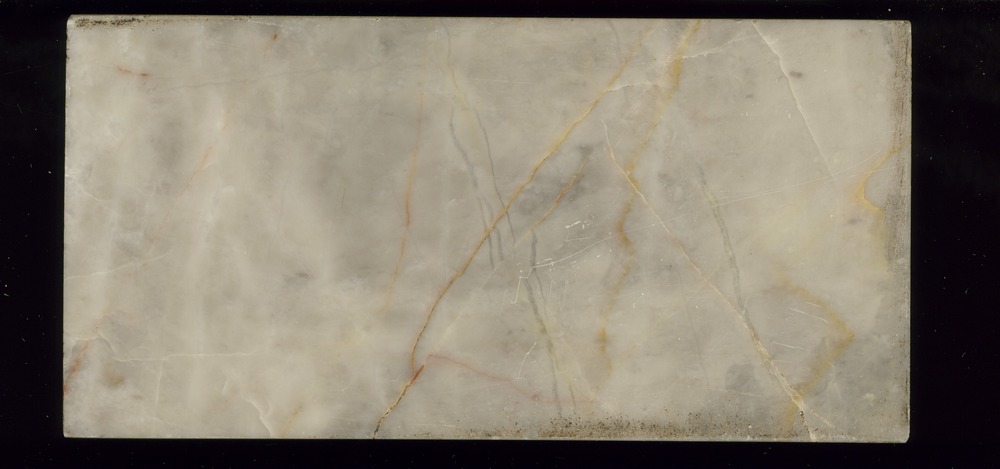
Portasanta, from northwest of Chora, Island of Chíos, North Aegean, Greece
|
|---|
| Geological description: |
White limestone with relics of bioclasts, spar filled veins and a few yellowish iron oxide-stained veins and stylolites. It is likely to be part of a large clast from a breccia.
|
|---|
| Comments: |
Portasanta is named after the Holy Door of St Peter's Basilica in the Vatican (see the Portasanta pdf). It was first used by the ancient Greeks, and was extensively quarried by the Romans from the 1st century BC until the quarries closed in Byzantine times and for centuries their location was lost. Corsi was incorrect in believing this to be Carian marble from the Turkish island of Iasos. The ancient quarries were rediscovered on the Island of Chios, Greece, by William Brindley at the end of the 19th century. Since then, there has been sporadic extraction of the stone. Together, Corsi's specimens of Portasanta show well the typical pink/brownish red/grey/white colour palette of this breccia, and the net-like arrays of stylolites often seen in the Chian rock.
|
|---|
| References: |
Borghini (1997) 285-287; Corsi (1845) 95-97; Lazzarini (2002c) 262-265; Porter (1907) 70-72; Price (2007) 140-141
|
|---|
| Further information: |
Portasanta.pdf
|
|---|